
Customs Official Documents Translation in Delhi – Certified & Reliable Services
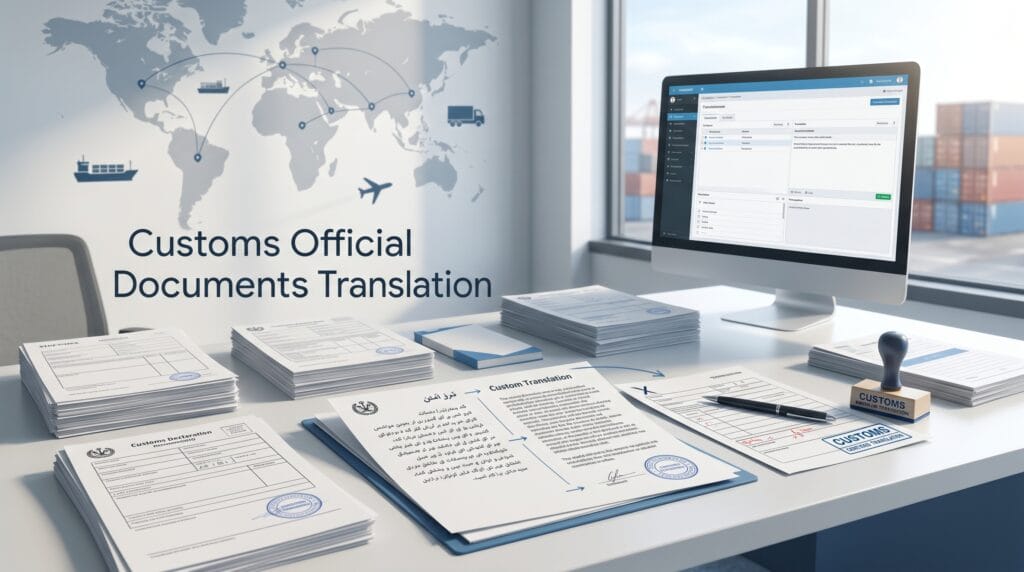
International trade and cross-border documentation require precise communication, especially when dealing with customs authorities. Documents in languages like Persian, Pashto, and Dari often need to be translated into English for smooth processing. At Linguify Translation Services, we provide accurate and certified Customs Official Documents Translation services tailored for legal and regulatory use.
Whether you are handling import-export documentation, compliance filings, or official submissions, having correctly translated documents helps avoid delays and ensures acceptance by authorities. Our approach focuses on clarity, accuracy, and proper formatting to meet real-world requirements.
What is Customs Official Documents Translation?
Customs official documents translation involves converting trade, shipping, and regulatory documents from one language into another while preserving their exact meaning and structure.
This is commonly required when documents in Persian, Pashto, or Dari must be submitted to Indian authorities or international agencies in English. Certified translations ensure that the documents are complete, accurate, and suitable for official use by customs departments, embassies, and regulatory bodies.
Documents / Use Cases
Customs Official Documents Translation is typically required for:
- Commercial invoices and shipping bills
- Bills of lading and packing lists
- Certificates of origin
- Import/export declarations
- Trade agreements and contracts
- Customs clearance documents
- Regulatory compliance paperwork
Why Customs Document Translation Matters
Accurate Customs Official Documents Translation is essential because even minor errors can lead to shipment delays, compliance issues, or financial penalties.
Professional translation helps:
- Ensure smooth customs clearance
- Avoid misinterpretation of goods or values
- Meet regulatory and legal requirements
- Reduce delays in approvals and logistics
For businesses and individuals involved in international trade, reliable translation is a critical step.
Why Choose Linguify Translations
Choosing the right provider for Customs Official Documents Translation ensures your documents meet official standards. At Linguify Translation Services, we focus on delivering practical and accurate solutions.
- Certified and accurate translations
- Experienced linguists in Persian, Pashto, and Dari
- Familiarity with customs and legal terminology
- Timely delivery aligned with deadlines
- Clear communication throughout the process
- Confidential handling of documents
Additional Certified Translation Services
We also provide certified translations for:
- GST Certificate
- Import Export Certificate
- Financial Reports
- Audit Reports
- Invoice & Bill of Lading
- NOC
Additional Services
To support your documentation needs, we also assist with:
- Notary services
- Apostille processing
- Sworn translations (Spanish, French, and German)
How it works
Conclusion
Accurate Customs Official Documents Translation plays an important role in ensuring smooth customs clearance and regulatory compliance. With a focus on precision, clarity, and reliability, Linguify Translation Services helps you handle official documentation with confidence and efficiency.
Our process is simple and efficient:
Share your document
Review and receive a quote
Translation and quality check
Final delivery
PAN India Service
We offer Customs Official Documents Translation services across Delhi and throughout India. With online support, you can share your documents digitally and receive completed translations without visiting in person.
Contact Details
If you need assistance with birth certificate translation Delhi or any other certified translation, you can reach out to Linguify Translation Services directly.
📧 Email: info@linguifytranslations.com
📞 Phone/WhatsApp: +91-921 149 6528 844 708 9386
You can simply share a scanned copy or clear photo of your document, and the team will review it and respond with details on timelines and pricing.